Sagging Cheeks Treatment in Jongno, Seoul, Korea
Myeongdong Obliv Clinic Seoul Origin
Myeongdong Obliv Clinic Seoul Origin offers personalized sagging cheeks treatments in Jongno for patients concerned with facial laxity, reduced firmness, and loss of definition around the cheeks and jawline. Through its Skin Architecture approach, the clinic tailors non-surgical lifting, energy-based treatments, and skin rejuvenation according to individual facial structure and aging concerns for subtle, natural-looking results in Korea.
Sagging Cheeks Treatment in Jongno, Seoul, Korea
Myeongdong Obliv Clinic Seoul Origin
If you are looking for Sagging Cheeks Treatment in Jongno, Seoul, Korea, the most important step is identifying why the cheeks are sagging. Cheek descent can be related to skin laxity, collagen loss, changes in facial fat, mid-face volume loss, or a combination of these factors.
Treatment can therefore range from HIFU and Ultherapy Prime to Thermage FLX, RF tightening, thread lifting, collagen-stimulating treatments, or volume restoration.
A practical approach is:
Facial Analysis → Identify the Cause → Assess Treatment Depth → Select Lifting / Tightening → Monitor Remodeling
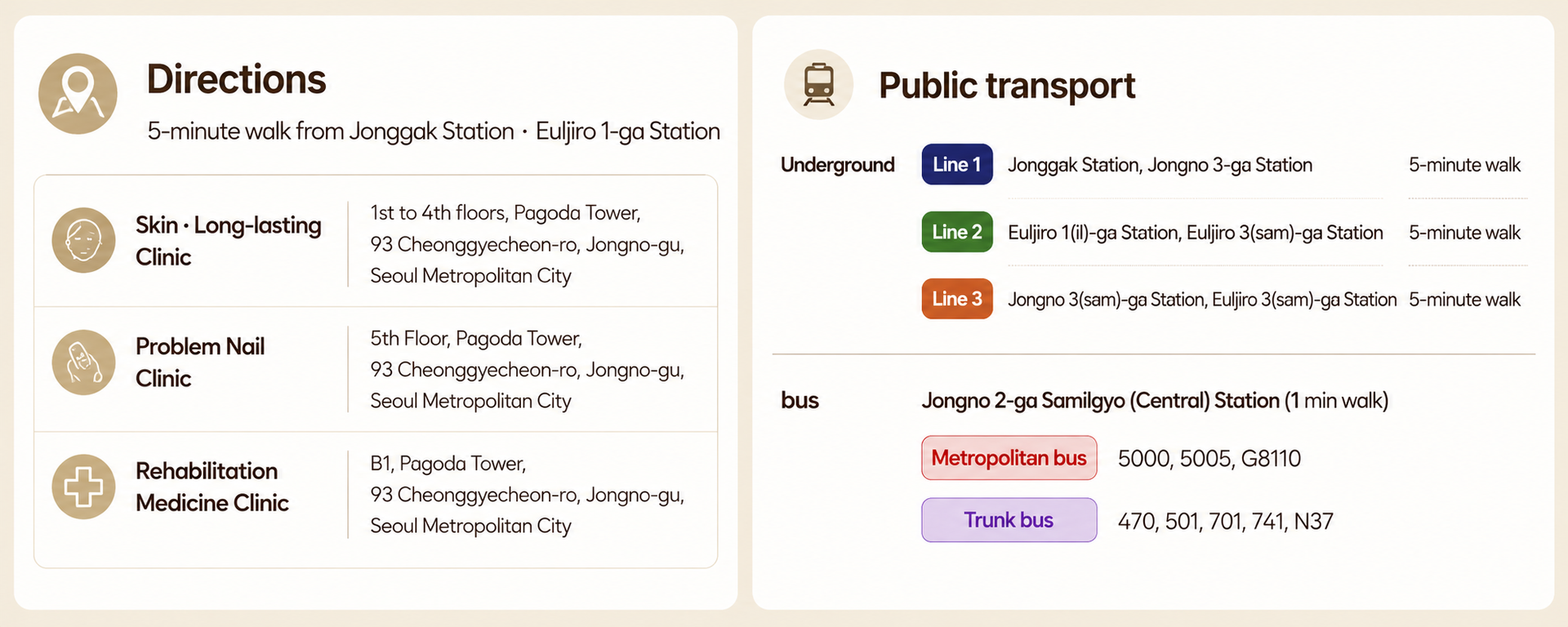
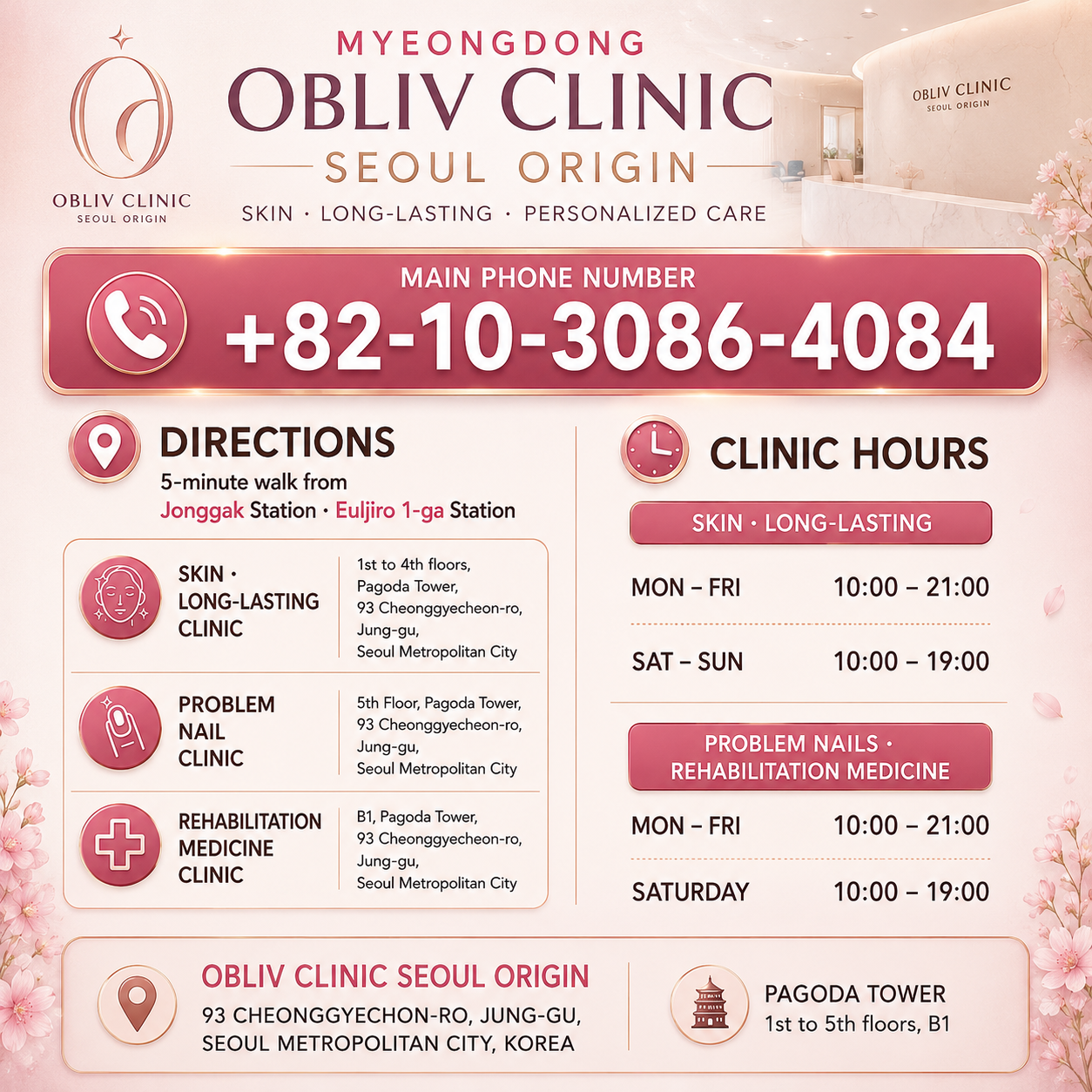
오블리브의원 서울 오리진 is a dermatology clinic located at 93 Cheonggyecheon-ro in Jongno, with current listed hours of 10:00–21:00 Monday–Friday and 10:00–19:00 Saturday–Sunday.
What Causes Sagging Cheeks?
Cheek sagging is usually not caused by one factor.
Common contributors include:
- Collagen loss
- Reduced skin elasticity
- Mid-face tissue descent
- Facial fat redistribution
- Loss of cheek volume
- Gravity
- Reduced dermal thickness
- Age-related changes in facial structure
A simplified process is:
Collagen Loss → Reduced Firmness
Volume Redistribution → Changed Facial Contour
Tissue Descent → Lower Cheeks
Jowling → Less Defined Jawline
This is why the strongest lifting device is not automatically the best choice.
What Is the Best Treatment for Sagging Cheeks?
There is no single best treatment for every patient.
The treatment direction can be broadly divided into:
Deep Tissue Laxity → HIFU / Ultherapy Prime
Skin Laxity → Thermage FLX / RF
Mild Firmness Loss → Sofwave / RF-Based Treatment
Sagging Tissue → Thread Lift
Volume Loss → Filler / Volume Restoration
Collagen Loss → Collagen Stimulator / Skin Booster
Mixed Aging → Combination Treatment
Non-surgical lifting technologies are commonly used for drooping cheeks, jawline laxity, and early-to-moderate facial sagging.
Ultherapy Prime for Sagging Cheeks
Ultherapy Prime uses focused ultrasound energy to target deeper facial tissue and stimulate remodeling.
It may be considered when cheek sagging is associated with:
- Deeper tissue laxity
- Mid-face descent
- Lower-face sagging
- Jowls
- Reduced jawline definition
Ultherapy is generally positioned as a deeper lifting treatment, while Thermage is primarily focused on RF-based skin tightening and collagen remodeling.
For patients concerned about sagging cheeks, the treatment depth and energy distribution should be customized rather than simply choosing the highest number of shots.
HIFU for Sagging Cheeks
HIFU uses focused ultrasound energy to stimulate tissue remodeling.
Potential goals include:
- Lifting the cheeks
- Improving lower-face definition
- Reducing mild jowling
- Supporting the jawline
- Improving skin firmness
Different HIFU devices and cartridges target different depths, so “HIFU” is not one identical treatment.
The correct depth depends on the patient's facial anatomy and the location of the laxity.
Thermage FLX for Sagging Cheeks
Thermage FLX uses radiofrequency energy to heat tissue and stimulate collagen remodeling.
It can be considered when sagging cheeks are accompanied by:
- Loose skin
- Reduced firmness
- Fine wrinkles
- Poor elasticity
- Generalized facial aging
Thermage is better understood as a tightening and collagen-remodeling treatment rather than a direct replacement for lost cheek volume.
Thermage vs. Ultherapy for Sagging Cheeks
A simple comparison is:
ConcernMore Relevant DirectionDeeper tissue laxityUltherapy / HIFUGeneral skin laxityThermage / RFCollagen remodelingThermage / RFMid-face descentHIFU / UltherapySurface firmnessRF / ultrasoundSignificant volume lossVolume restoration
Ultherapy and Thermage work differently: Ultherapy uses focused ultrasound for deeper targeted lifting, while Thermage uses RF to remodel collagen and improve firmness.
Neither is universally “better.”
RF Treatment for Sagging Cheeks
Radiofrequency treatments can improve skin firmness through controlled heating and collagen remodeling.
They may be appropriate for:
- Early cheek laxity
- Fine wrinkles
- Reduced elasticity
- Loose skin
- Overall skin-quality improvement
Different RF devices target different depths and have different treatment characteristics.
A personalized assessment is therefore more useful than choosing a device solely by brand name.
Sofwave for Sagging Cheeks
Sofwave is a focused ultrasound treatment designed around the upper dermal layer.
It may be considered when the primary concern is:
- Mild skin laxity
- Reduced firmness
- Early facial aging
- Collagen stimulation
This makes it different from deeper HIFU treatments.
If the main issue is substantial mid-face descent, a deeper lifting approach may be considered instead.
RF Microneedling for Sagging Cheeks
RF microneedling combines microneedling with radiofrequency energy.
It may be useful when cheek sagging is accompanied by:
- Rough texture
- Enlarged pores
- Fine lines
- Reduced collagen
- Mild laxity
It therefore has an advantage when skin quality and firmness are both concerns.
Temporary redness, swelling, or sensitivity can occur because needles are used.
Thread Lift for Sagging Cheeks
Thread lifting is a minimally invasive approach that can mechanically support sagging tissue while stimulating collagen.
It may be considered for:
- Drooping cheeks
- Jowls
- Jawline laxity
- Nasolabial folds
- Marionette lines
Some Korean dermatology clinics specifically list thread lifting for sagging cheeks, nasolabial folds, and poorly defined jawlines.
Thread lifting generally involves more recovery than non-invasive HIFU or RF.
Sagging Cheeks & Jowls
Cheek descent and jowling often occur together.
A common progression is:
Mid-Face Descent → Lower Cheek Sagging → Jowls → Less Defined Jawline
If jowls are prominent, treating only the cheek skin may not provide the desired contour.
A complete assessment should therefore consider:
- Cheek position
- Lower-face tissue
- Jawline
- Chin
- Submental area
- Skin elasticity
Sagging Cheeks & Volume Loss
Not every sagging cheek needs lifting.
Sometimes the face appears flatter because of volume loss, rather than simply tissue descent.
In such cases:
Volume Loss → Volume Restoration
may be more appropriate than aggressive tightening.
Potential options can include:
- Hyaluronic acid filler
- Collagen stimulators
- Sculptra
- Radiesse
- Selected skin boosters
Removing additional facial volume from a thin, already-deflated face may not produce the desired result.
Sagging Cheeks & Facial Fat
Excess cheek or lower-face fat can make the face appear heavy, but reducing facial fat is not appropriate for everyone.
The distinction is important:
Excess Fat → Contouring Assessment
Loose Skin → Tightening / Lifting
Volume Deficiency → Volume Restoration
Fat + Laxity → Combination Planning
A recent Seoul clinic guide specifically notes that Onda is more appropriate for contour and prominent facial fat than for directly lifting sagging skin.
Sagging Cheeks & Nasolabial Folds
Cheek descent can make the nasolabial folds more prominent.
The relationship can be:
Mid-Face Descent → Increased Tissue Weight → Deeper Nasolabial Fold
Lifting may therefore soften the appearance of the fold when sagging is the primary cause.
However, significant volume loss may require a different strategy.
Sagging Cheeks & Marionette Lines
Lower-face descent can also contribute to marionette lines.
Potential treatment directions include:
Sagging → HIFU / RF / Thread Lift
Volume Loss → Filler / Volume Restoration
Downturned Mouth Corners → DAO Botox
Skin Quality → Collagen / Skin Booster
A combination may be appropriate when multiple causes overlap.
Sagging Cheeks & Jawline Definition
A sharper jawline is often one of the main goals of cheek-lifting treatment.
Improving cheek and lower-face support may make the transition between the cheek, jawline, and chin appear more defined.
However, jawline definition also depends on:
- Chin projection
- Submental fat
- Bone structure
- Masseter size
- Skin laxity
Therefore, lifting alone cannot correct every type of undefined jawline.
Sagging Cheeks Treatment for International Patients
International patients should tell the clinic about:
- Main concern
- Age-related changes
- Previous HIFU
- Previous Ultherapy
- Previous Thermage
- Previous RF treatments
- Previous thread lifts
- Previous filler
- Previous facial surgery
- Current skincare
- Desired degree of lifting
- Available downtime
- Length of stay in Korea
- Upcoming flight
- Important events
Previous treatments are particularly important because they may influence treatment selection and energy settings.
Sagging Cheeks Treatment for Tourists in Jongno
Visitors staying around Jongno, Insadong, Gwanghwamun, or Bukchon can potentially schedule cheek-lifting treatment during a Seoul trip.
A practical itinerary could be:
Morning → Facial Analysis
Late Morning → Lifting Treatment
Afternoon → Flexible Sightseeing
Evening → Dining
For treatments that may cause tenderness or swelling, keeping the rest of the day flexible is advisable.
Sagging Cheeks Treatment With Minimal Downtime
Many non-surgical lifting treatments are designed around limited recovery.
Potentially lower-recovery options include:
- HIFU
- Ultherapy
- Thermage
- RF tightening
- Selected ultrasound treatments
Temporary effects can include:
- Redness
- Warmth
- Tightness
- Tenderness
- Mild swelling
Thread lifting and injectable procedures can produce more visible bruising or swelling.
Non-surgical does not necessarily mean zero recovery.
Sagging Cheeks During a 3 Day Seoul Trip
For a short three-day trip:
Day 1 → Facial Analysis
Day 2 → Lifting Treatment
Day 3 → Sightseeing / Departure
Lower-recovery treatments can be easier to fit into this itinerary.
If you choose threads or injectables, allow additional time for possible swelling or bruising.
Sagging Cheeks During a 5 Day Seoul Trip
A five-day trip provides more flexibility:
Day 1 → Facial Analysis
Day 2 → Main Treatment
Day 3 → Recovery / Indoor Activities
Day 4 → Sightseeing
Day 5 → Final Activities & Flight
This schedule can be more comfortable for procedures with temporary swelling or tenderness.
Sagging Cheeks Before Flying Home
Tell your clinician about your return flight before treatment.
Depending on the procedure, you may experience:
- Swelling
- Bruising
- Tenderness
- Redness
- Temporary sensitivity
This is particularly relevant to thread lifting and injectable treatments.
A useful principle is:
Treatment → Recovery → Flight
rather than scheduling a treatment with expected swelling immediately before a long-haul flight.
Natural-Looking Cheek Lifting
The objective should not be to make the cheeks look unnaturally pulled upward.
A natural result generally means:
- Improved cheek firmness
- Softer jowls
- Better facial definition
- More refined jawline
- Preserved facial expression
- Balanced facial proportions
The appropriate amount of lifting varies according to age, facial anatomy, skin thickness, and volume distribution.
Personalized Sagging Cheek Analysis
At Myeongdong Obliv Clinic Seoul Origin, a personalized lifting assessment can consider:
- Cheek laxity
- Mid-face descent
- Jowling
- Facial fat
- Volume loss
- Skin elasticity
- Collagen condition
- Jawline definition
- Facial symmetry
- Previous procedures
- Desired correction
- Available downtime
The goal is to determine whether the priority should be deep lifting, RF tightening, collagen remodeling, contouring, volume restoration, or combination treatment.
Why Choose Myeongdong Obliv Clinic Seoul Origin?
Patients searching for Sagging Cheeks Treatment in Jongno may consider 오블리브의원 서울 오리진 for personalized Korean aesthetic and skin care.
Areas of interest can include:
- Sagging cheek consultation
- Facial analysis
- Ultherapy Prime
- HIFU lifting
- Thermage FLX
- RF tightening
- RF microneedling
- Sofwave
- Thread lifting
- Collagen stimulators
- Skin boosters
- Rejuran
- Juvelook
- Exosome
- Jawline lifting
- Jowl treatment
- Nasolabial fold care
- Marionette line treatment
- Facial contouring
- Skin rejuvenation
- International patient consultation
- Travel-focused treatment planning
- Minimal-downtime options
- Recovery guidance
The clinic's current contour-treatment information distinguishes technologies according to target depth and concern, including deeper ultrasound lifting, RF tightening, upper-dermal treatment, and facial-volume contouring.
A Smarter Approach to Sagging Cheeks
Instead of asking:
“What is the strongest cheek-lifting treatment?”
start with:
“What is causing my cheeks to sag?”
For example:
Deep Laxity → Ultherapy Prime / HIFU
Skin Laxity → Thermage / RF
Mild Firmness Loss → Sofwave / RF
Sagging Tissue → Thread Lift
Volume Loss → Filler / Volume Restoration
Excess Facial Fat → Contouring
Mixed Aging → Combination Treatment
This creates a more targeted and natural-looking treatment plan.
Sagging Cheeks & Long-Term Maintenance
Non-surgical lifting is not permanent because the skin and facial structures continue to age.
Maintenance may include:
- Sun protection
- Consistent skincare
- Hydration
- Collagen-supportive treatments
- Periodic lifting treatments
- Appropriate facial contour management
- Follow-up assessments
The ideal maintenance interval varies according to the technology, treatment intensity, age, skin condition, and individual response.
Safety & Treatment Considerations
Patients should tell the clinic about:
- Previous HIFU
- Previous Ultherapy
- Previous Thermage
- Previous RF
- Previous thread lifting
- Previous filler
- Previous facial surgery
- Current medications
- Allergies
- Active skin inflammation
- Recent cosmetic procedures
- Recent dental procedures
- Recent sun exposure
- History of abnormal scarring
- Upcoming flights
- Important events
No aesthetic procedure is completely risk-free. Treatment intensity and device selection should be determined after an individual medical assessment.
Frequently Asked Questions
What is the best treatment for sagging cheeks in Jongno?
There is no universal best treatment. HIFU or Ultherapy may be considered for deeper laxity, RF for skin firmness, threads for selected sagging tissue, and volume restoration when facial deflation is the main issue.
Is Ultherapy Prime good for sagging cheeks?
Ultherapy Prime may be considered when deeper tissue laxity contributes to cheek descent and lower-face aging. It is a focused-ultrasound lifting treatment rather than a volume-restoration procedure.
Is Thermage FLX good for sagging cheeks?
Thermage FLX may improve skin firmness and collagen remodeling when skin laxity is a major component. It does not directly replace lost cheek volume.
Which is better for cheeks, Ultherapy or Thermage?
Neither is automatically better. Ultherapy targets deeper tissue with focused ultrasound, while Thermage uses RF to improve firmness and collagen remodeling. The choice depends on the patient's anatomy and type of laxity.
Can HIFU lift sagging cheeks?
Yes, HIFU can be used for non-surgical lifting and may improve cheek and lower-face laxity. The expected effect depends on the device, treatment depth, degree of sagging, and individual anatomy.
Can thread lifting lift sagging cheeks?
Yes. Thread lifting can provide mechanical support to sagging tissue and stimulate collagen, but it is more invasive than HIFU or RF and has greater recovery considerations.
Can filler fix sagging cheeks?
Filler can help when loss of facial volume contributes to the appearance of sagging. It does not directly tighten loose skin, so volume loss and skin laxity should be distinguished.
Can tourists get sagging cheek treatment in Jongno?
Yes. Jongno has dermatology clinics serving local and international patients. For example, Heritique Dermatology Skin Clinic Seoul is located near Gwanghwamun in Jongno and lists dermatology services for international patients.
Can I get cheek lifting during a short Seoul trip?
Yes, depending on the treatment. HIFU, RF, and other lower-recovery procedures can be easier to fit into a short itinerary than thread lifting or injectable treatments.
Can I get cheek lifting before flying home?
Potentially, but the expected recovery should be considered. Treatments that can cause swelling, bruising, or tenderness are generally better scheduled earlier in the trip.
Can non-surgical treatment completely remove sagging cheeks?
Non-surgical lifting can improve mild-to-moderate laxity, but it cannot reproduce the degree of tissue repositioning possible with surgical facelift procedures. Advanced sagging may require a surgical consultation.
Myeongdong Obliv Clinic Seoul Origin – Sagging Cheeks Treatment in Jongno
For international patients searching for Sagging Cheeks Treatment in Jongno, Seoul, Korea, 오블리브의원 서울 오리진 provides personalized Korean aesthetic and skin care focused on cheek sagging, mid-face descent, jowls, facial laxity, collagen loss, facial volume, and jawline definition.
Whether your priority is
lifting drooping cheeks, reducing jowls, tightening loose skin, restoring facial support, improving the jawline, or achieving a more youthful but natural-looking contour, a personalized facial analysis can help determine whether Ultherapy Prime, HIFU, Thermage FLX, RF tightening, RF microneedling, thread lifting, collagen stimulation, volume restoration, or a combination approach is appropriate for your facial structure, degree of laxity, skin condition, previous procedures, travel schedule, recovery requirements, and long-term aesthetic goals.