Laser Toning in Jongno & Myeongdong Laser toning in Seoul, explained.
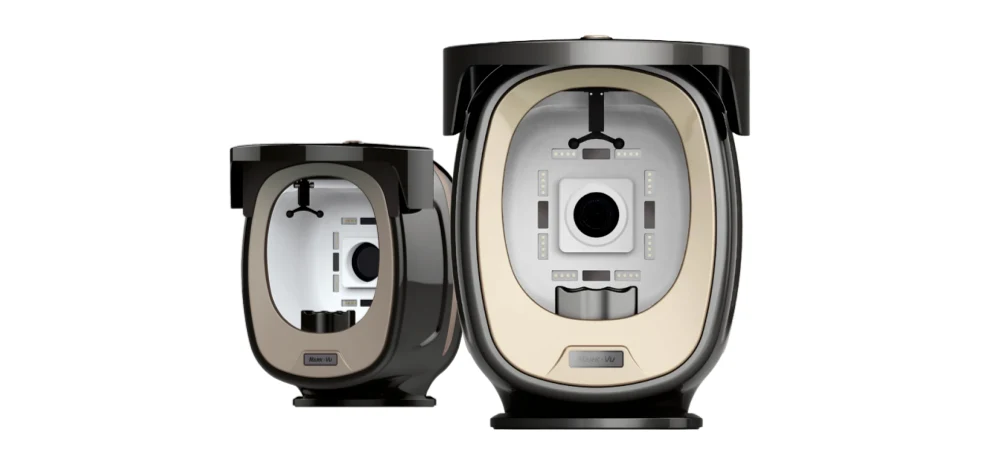
Laser toning uses a Q-switched Nd:YAG laser at low energy across the face to gradually lighten melasma, dullness and uneven tone, with very little downtime. It is done as a course of short sessions. At Obliv Seoul Origin in Jongno, central Seoul, a physician reads your pigment with Mark-Vu imaging before recommending it.
Laser Toning, in brief.
The essentials, answered plainly. Your physician confirms what applies to your skin at consultation.
Ask a physician- What it is
- Low-fluence toning with a Q-switched 1064 nm Nd:YAG laser, a long-established method in Korean dermatology.
- Best for
- Melasma, diffuse pigment, dullness and uneven tone.
- How it works
- Nanosecond pulses at low energy break up fine pigment gradually while keeping inflammation low.
- Skin layer treated
- Epidermis and upper dermis.
- Treatment time
- About 15–20 minutes; numbing is rarely needed.
- Downtime
- Mild redness for a few hours; most people return to plans the same day.
- Results
- Tone becomes brighter and more even gradually over the course.
- Typical course
- Typically 5–10 sessions about 1–2 weeks apart, then maintenance.
How does laser toning work?
Laser toning uses a Q-switched Nd:YAG laser, which delivers energy in nanosecond pulses. At low, even settings passed over the whole face, it gradually breaks up fine pigment rather than targeting a single spot.
The gentle approach is the point: melasma and diffuse pigment can darken with aggressive heat, so modest energy repeated over several sessions tends to be safer and more predictable.
In our Skin Architecture approach, toning addresses pigment in the epidermis and upper dermis. Where redness and pigment overlap, your physician may plan the two separately.
Laser toning or pico toning?
Both are low-energy toning methods with similar courses and downtime. The difference is pulse length: laser toning uses nanosecond pulses, pico toning uses picosecond pulses with less heat.
Neither is universally better. Your physician will choose based on your pigment type, how sensitive your skin is and how you have responded to earlier treatments. The specific toning device used for you is confirmed at consultation.
What happens on the day?
The first visit starts with a physician consultation and Mark-Vu imaging. Follow-up sessions are short, which makes them easy to fit around sightseeing in Insadong or shopping in Myeongdong.
- Consultation and Mark-Vu imaging with a physician
- Cleansing and eye protection
- Even laser passes across the face (around 15–20 minutes)
- Soothing care and sunscreen
- Session recorded in the Skin Library to track progress
Aftercare, sun protection and travel
Mild redness and a warm feeling usually settle within hours. Use gentle skincare, avoid scrubs and strong acids for a few days, and apply broad-spectrum sunscreen every day throughout the course.
Darker skin tones are more prone to post-inflammatory hyperpigmentation and, with repeated sessions, occasional uneven lightening, so energy is set conservatively and progress is checked at each visit. Flying the next day is usually fine.
Laser toning is usually postponed during pregnancy, with active skin infection, after recent tanning, or while taking isotretinoin. Your physician will check this at consultation.
Laser toning vs pico toning
| Laser toning (Q-switched) | Pico toning | |
|---|---|---|
| Pulse length | Nanoseconds | Picoseconds |
| Main effect | Photothermal and photoacoustic | Mostly photoacoustic, low heat |
| Best for | Melasma, dullness, uneven tone | Melasma, dullness, fine pigment |
| Downtime | Mild redness for hours | Mild redness for hours |
| Typical course | 5–10 sessions, 1–2 weeks apart | 5–10 sessions, 1–2 weeks apart |
Concerns laser toning is chosen for
From first message to follow-up.
Consultation, plan and aftercare are handled in English — whether you live in Seoul or are here for a few days.
Message us on WhatsApp with your concerns and travel dates. We reply with availability.
Mark-Vu imaging and a physician consultation identify which skin layer is involved.
A clear plan and pricing before anything begins — often on the same day when appropriate.
Written aftercare, and your records kept in our Skin Library for your next visit.
Not sure it is right for you?
Send a photo and a few lines about your concern. A physician-led team will tell you whether Laser Toning suits your skin — or what would suit it better.
Start a WhatsApp enquiry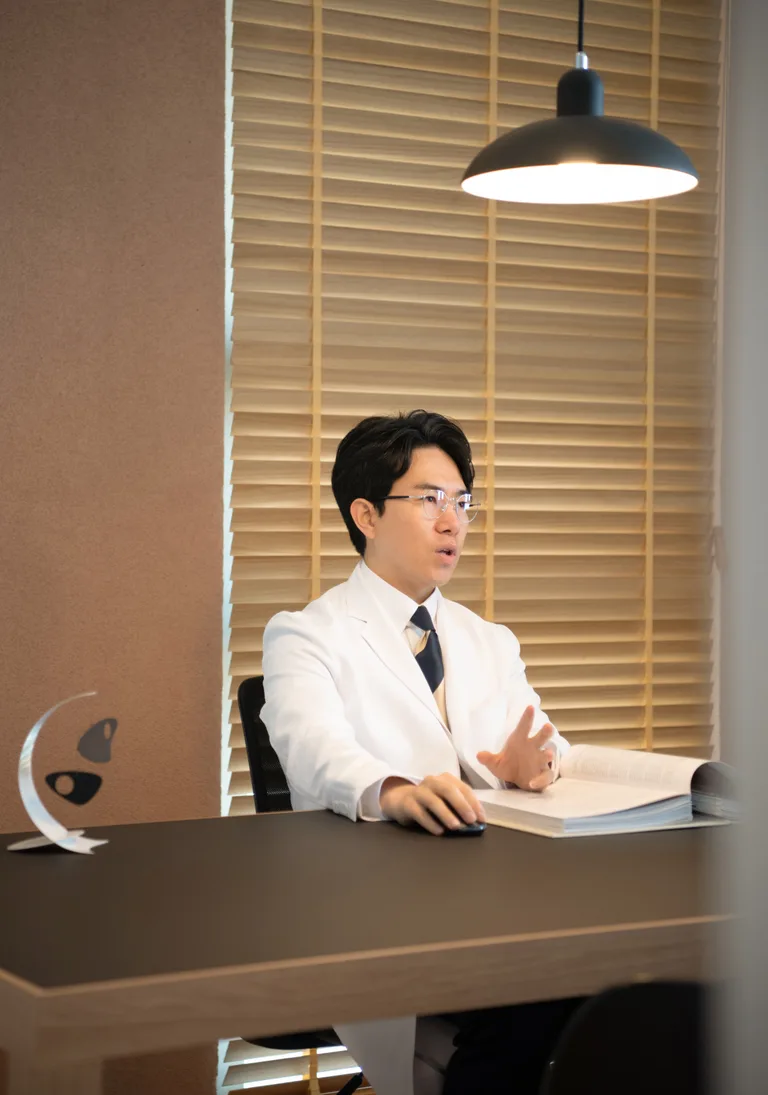

Laser Toning — asked & answered.
General information only. Your physician will advise on what is right for your skin.
Ask your own questionHow many laser toning sessions are needed?
Typically 5–10 sessions about 1–2 weeks apart. Your physician will review progress with Mark-Vu imaging and adjust the plan.
Does laser toning hurt?
It feels like light, warm snapping on the skin. Most people find it comfortable without numbing cream.
Is laser toning safe for melasma?
Yes — when done at low energy and spaced appropriately, it is a widely used approach for melasma. Strict sun protection is needed, and melasma usually requires ongoing maintenance.
Can I fly after laser toning?
Yes — downtime is minimal, so flying the next day is usually fine. Keep reapplying sunscreen, especially on long daytime flights by the window.
Can I wear make-up afterwards?
Usually yes, from the same evening or the next day once any redness has settled. Choose gentle products and keep up daily sunscreen.
Can I book on a weekend?
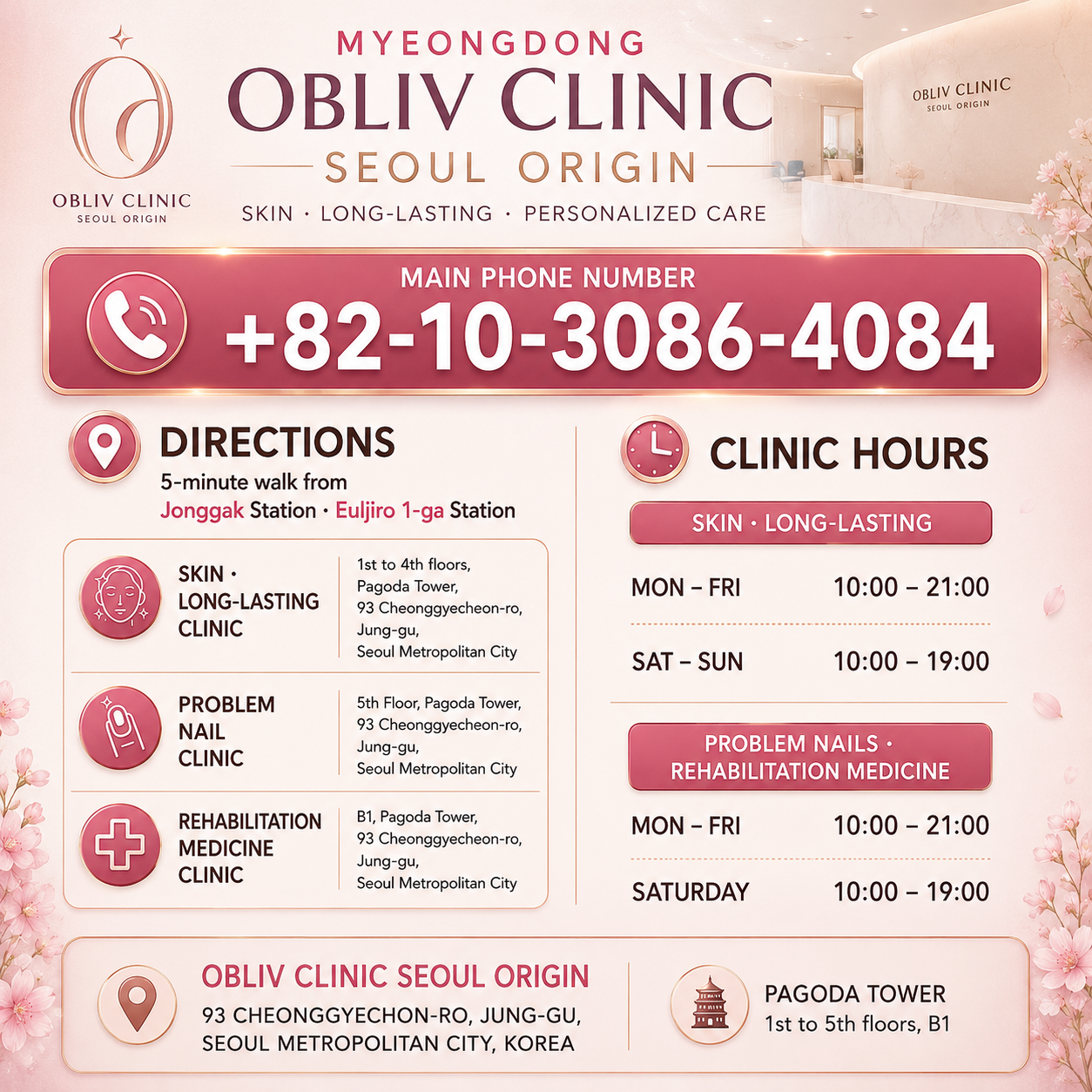
Yes — we are open seven days, Saturday and Sunday 10:00–19:00. Message us on WhatsApp to arrange a time; same-day treatment depends on availability and physician assessment.
Related treatments.
Pico Toning
Gentle, repeated low-energy pico sessions for melasma, dullness and uneven tone.
Read more → Tone · PigmentPico Laser
Ultra-short picosecond pulses that break up pigment for spots, tone and tattoo ink.
Read more → Tone · PigmentPigmentation Laser
Laser chosen by pigment type — sun spots, freckles, melasma, marks and deeper pigment.
Read more → Tone · PigmentFacial Redness Laser
Light-based treatment for persistent redness, broken capillaries and red post-acne marks.
Read more → Tone · PigmentPigmentation Treatment
Spots, freckles and melasma diagnosed first, then treated with Pico laser or gentle toning.
Read more → Visiting usLaser Skin Clinic in Jongno
Pico, toning, CO2 and fractional lasers — chosen by a physician for your skin and stay.
Read more →Visit the maison.
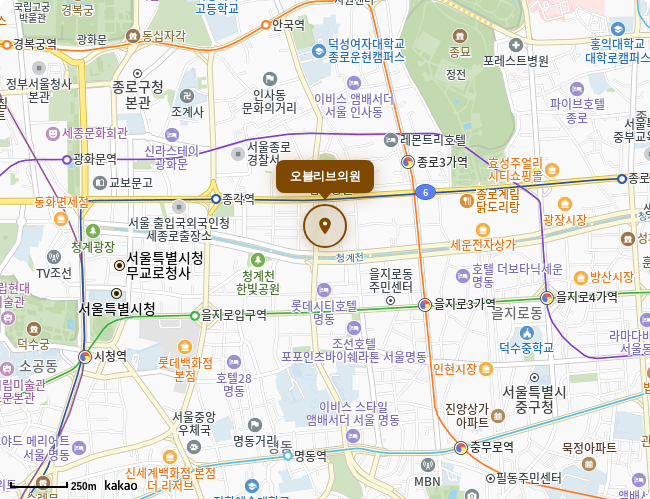
Pagoda Tower, 1st–2nd floor
93 Cheonggyecheon-ro, Jongno-gu, Seoul
서울특별시 종로구 청계천로 93 파고다타워 1~2층
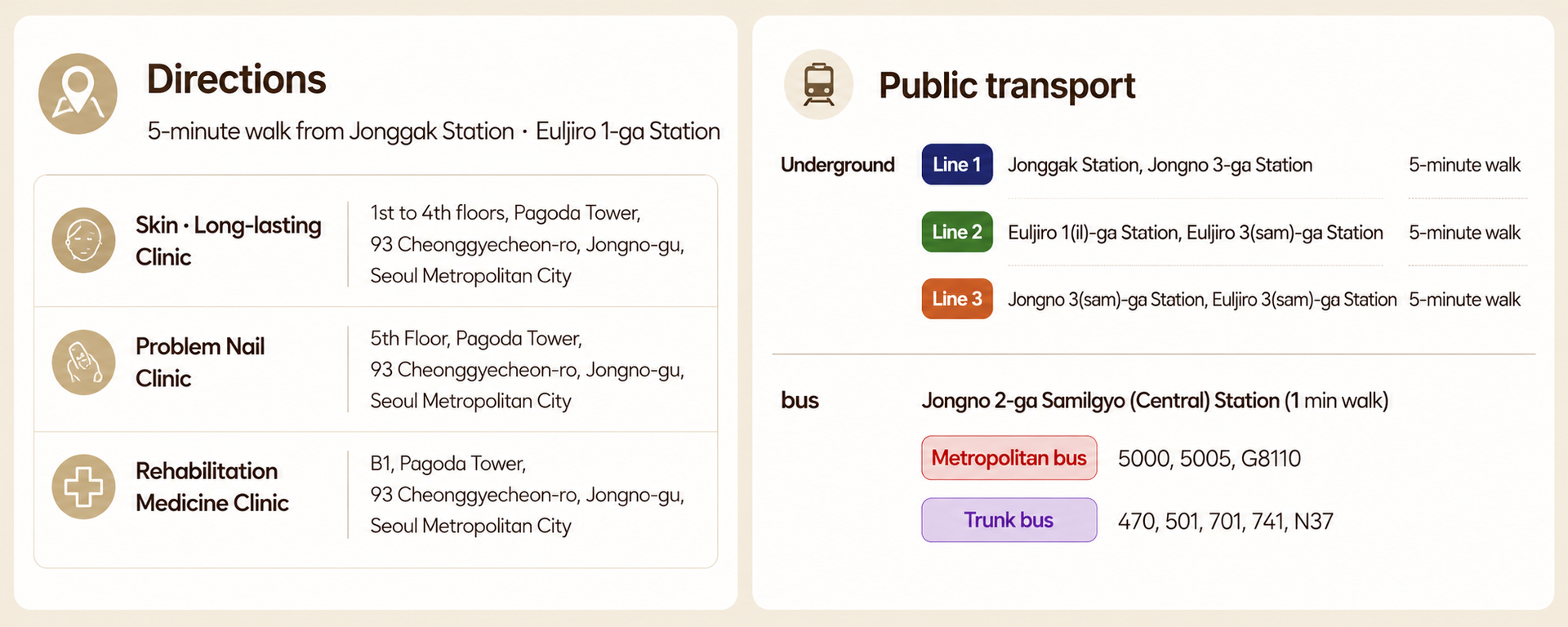
Line 2 — Euljiro 1-ga, Euljiro 3-ga
Line 3 — Jongno 3-ga, Euljiro 3-ga
Medical information on this page is for general education and does not replace an in-person consultation. Results, downtime and suitability vary between individuals; all treatments are performed only after physician assessment. Page reviewed by the Obliv Seoul Origin medical team.