Exosome in Jongno & Myeongdong Exosome skin treatment, explained.
Exosome skin treatment applies an exosome-based solution to the skin straight after resurfacing — such as Potenza microneedling or laser — when tiny channels let it absorb. It is used to support calmer, more comfortable recovery and skin quality. At Obliv Seoul Origin in Jongno, central Seoul, a physician decides whether it suits your plan.
Exosome, in brief.
The essentials, answered plainly. Your physician confirms what applies to your skin at consultation.
Ask a physician- What it is
- A topical exosome-based solution applied to freshly treated skin, usually as an add-on to resurfacing.
- Best for
- Supporting recovery after microneedling or laser, and dull, stressed or sensitive-feeling skin.
- How it works
- Exosomes are tiny vesicles that carry signalling molecules; applied through micro-channels, they are thought to support the skin's own repair.
- Skin layer treated
- Epidermis and upper dermis — reached through the channels made by the main treatment.
- Treatment time
- Usually 10–20 minutes added to your resurfacing session.
- Downtime
- Little of its own; downtime mainly reflects the laser or microneedling it accompanies.
- Evidence
- Promising but still developing — results vary, and it is best seen as a supportive step rather than a stand-alone fix.
- Typical course
- Often paired with each session of a 3–5 session resurfacing course, as advised by your physician.
What are exosomes, and how are they used on skin?
Exosomes are microscopic vesicles that cells use to pass signals to one another. Skincare exosome products contain these vesicles, prepared for cosmetic and clinical use, in a serum or solution.
On their own they do not penetrate intact skin very far. That is why, in clinic, they are usually applied immediately after a treatment that opens temporary micro-channels — Potenza microneedle RF, fractional or CO2 laser, or Pico laser — so the solution can reach the upper layers while the skin is actively repairing.
In our Skin Architecture approach, exosome care supports the epidermis and upper dermis. It complements the main treatment; it does not replace it.
What can exosome treatment realistically do?
Many people find that skin looks calmer and settles a little more comfortably after resurfacing when exosomes are added, and some notice a fresher, more even look over a course. Research into exosomes for skin is active and encouraging, but it is still early, and well-controlled studies are limited.
We therefore describe it honestly: a supportive recovery step that may help the overall result, chosen case by case. Your physician will tell you whether it adds enough to your plan to be worthwhile.
- Redness and sensitivity after microneedling or laser
- Dull, stressed-looking skin
- Post-acne texture, alongside resurfacing
- Uneven tone, alongside Pico laser
- Skin that tends to recover slowly
What happens on the day?
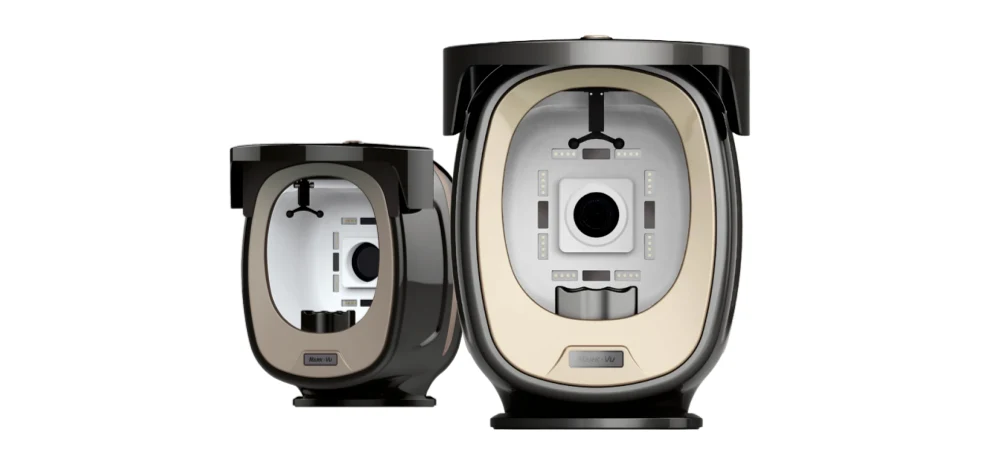
You meet a physician first, with Mark-Vu imaging to see pores, pigment, redness and moisture. The main treatment is then performed, and the exosome solution is applied over the freshly treated skin, often followed by a soothing mask.
- Consultation and Mark-Vu imaging with a physician
- Numbing cream if the main treatment needs it
- Resurfacing — for example Potenza, fractional or Pico laser
- Exosome solution applied to the treated area
- Soothing step and written aftercare in English
- Session recorded in the Skin Library
Recovery, aftercare and travel plans
Recovery follows the main treatment: typically redness for a few hours to a day or two, and sometimes fine pinpoint marks or mild flaking after microneedling or laser. Keep the skin clean, moisturised and protected with sunscreen, and avoid saunas, exfoliants and strong actives for a few days.
If you are visiting Seoul, plan resurfacing with exosome care early in your trip so the skin has a few days to settle before you fly — tell us your dates on WhatsApp.
Not usually advised during pregnancy or breastfeeding, with active infection or inflamed acne in the area, or if you have reacted to similar products before. Your physician will check this at consultation.
Exosome vs Rejuran — what's the difference?
| Exosome | Rejuran (PN) | |
|---|---|---|
| How it's given | Applied topically after resurfacing | Injected into the dermis |
| Main role | Supporting recovery after treatment | Repair and skin resilience over weeks |
| Used as | Usually an add-on | A treatment in its own right |
| Own downtime | Little beyond the main treatment | Small bumps for hours; possible bruising |
| Evidence | Developing | More established clinical use |
Concerns exosome care is chosen for
From first message to follow-up.
Consultation, plan and aftercare are handled in English — whether you live in Seoul or are here for a few days.
Message us on WhatsApp with your concerns and travel dates. We reply with availability.
Mark-Vu imaging and a physician consultation identify which skin layer is involved.
A clear plan and pricing before anything begins — often on the same day when appropriate.
Written aftercare, and your records kept in our Skin Library for your next visit.
Not sure it is right for you?
Send a photo and a few lines about your concern. A physician-led team will tell you whether Exosome suits your skin — or what would suit it better.
Start a WhatsApp enquiry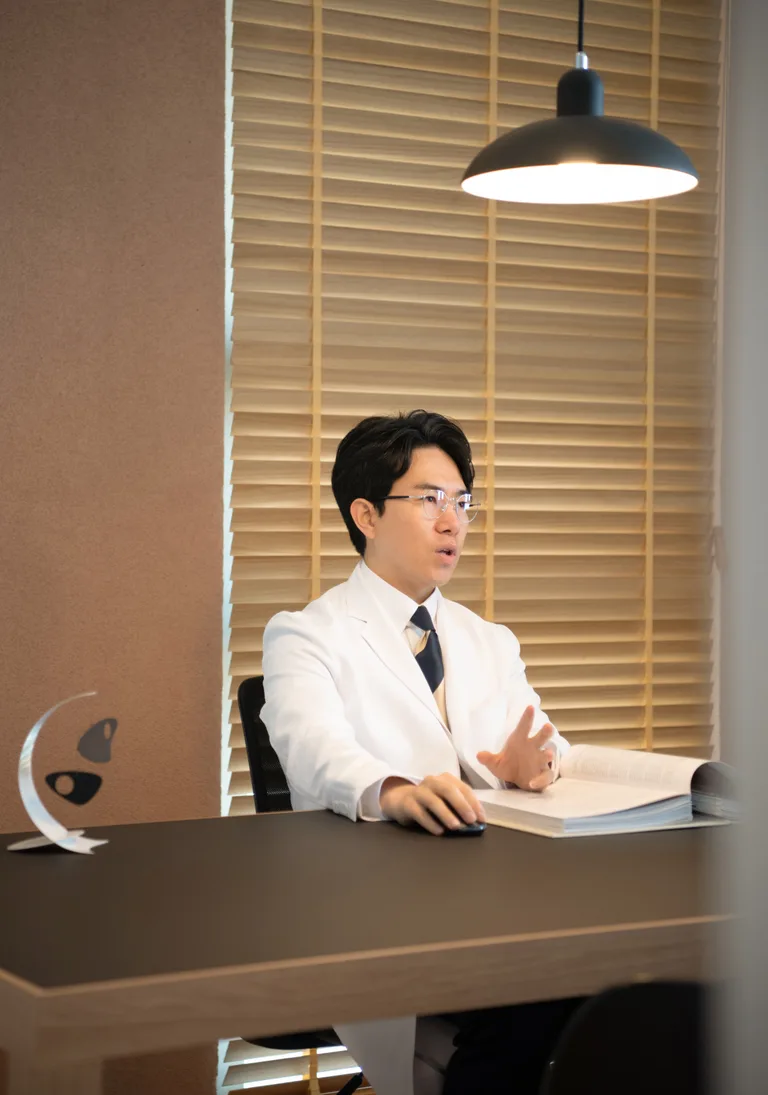

Exosome — asked & answered.
General information only. Your physician will advise on what is right for your skin.
Ask your own questionIs exosome treatment a stand-alone treatment?
Usually not. It works best applied straight after microneedling or laser, when the skin can absorb it; on its own, its effect is limited.
Are exosomes the same as stem cells?
No. Exosomes are tiny vesicles released by cells, not cells themselves. Skincare exosome products contain no living cells.
How much difference will it make?
It varies. Many people find recovery feels calmer and skin looks fresher, but evidence is still developing, so we treat it as a supportive step rather than promising a specific result.
Can I fly after exosome treatment?
Yes — the exosome step itself does not stop you flying. Allow time for the main treatment to settle: often 2–5 days depending on how intensive it was.
Does it hurt?
The exosome application itself is not painful and often feels soothing. Any discomfort comes from the microneedling or laser beforehand, for which numbing cream is used.
Can I walk in for it near Myeongdong?
We are in Jongno, a short walk from Myeongdong, and same-day treatment may be possible depending on availability and physician assessment. Message us on WhatsApp first so we can check.
Related treatments.
Pore Treatment
Enlarged pores treated by cause — microneedle RF, laser or boosters, chosen from imaging.
Read more → Skin RenewalGlass Skin Treatment
Hydration, even tone and smooth texture, combined into one plan for clear, luminous skin.
Read more → Collagen BoostRejuran
Polynucleotide injections that help skin repair itself — texture, firmness, glow.
Read more → Texture · ResurfacingFractional Laser
Microscopic laser columns that resurface scars, pores, texture and fine lines.
Read more → Tone · PigmentPico Laser
Ultra-short picosecond pulses that break up pigment for spots, tone and tattoo ink.
Read more → Visiting usSkin Clinic Near Myeongdong
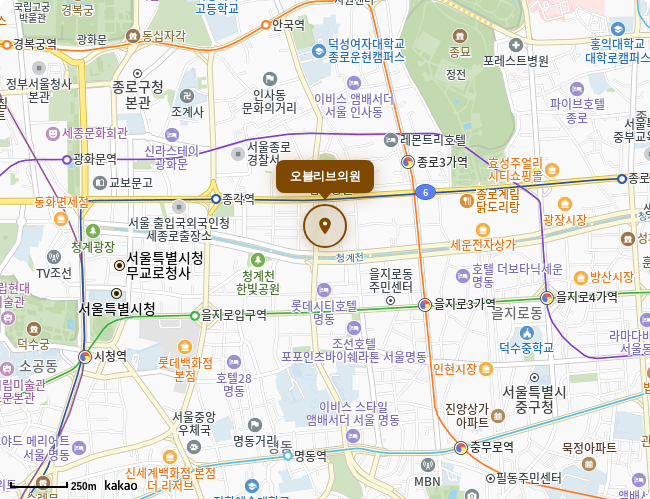
Just north of Myeongdong in Jongno — a short walk or one stop from the shopping streets.
Read more →Visit the maison.
Pagoda Tower, 1st–2nd floor
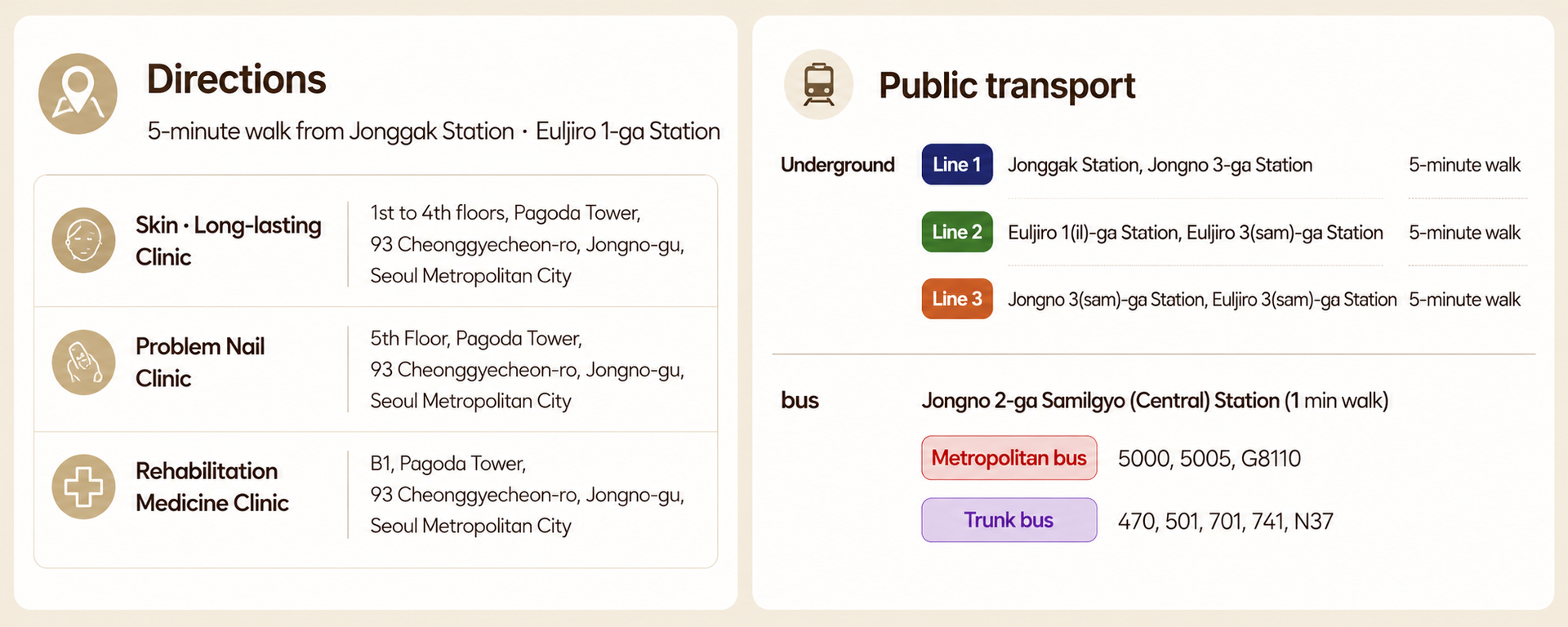
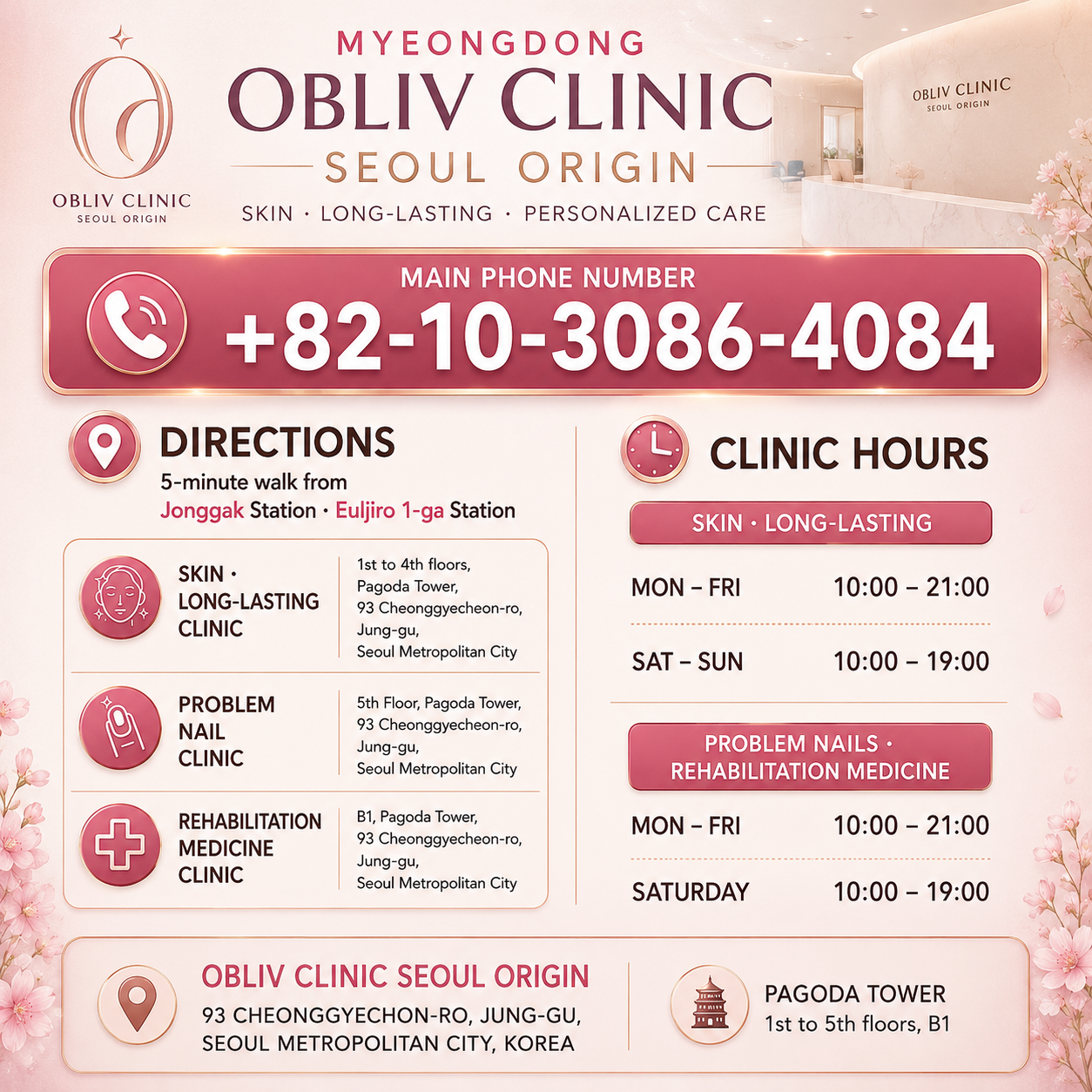
93 Cheonggyecheon-ro, Jongno-gu, Seoul
서울특별시 종로구 청계천로 93 파고다타워 1~2층
Line 2 — Euljiro 1-ga, Euljiro 3-ga
Line 3 — Jongno 3-ga, Euljiro 3-ga
Medical information on this page is for general education and does not replace an in-person consultation. Results, downtime and suitability vary between individuals; all treatments are performed only after physician assessment. Page reviewed by the Obliv Seoul Origin medical team.