Skin Barrier Treatment in Jongno, Seoul, Korea
Myeongdong Obliv Clinic Seoul Origin
Myeongdong Obliv Clinic Seoul Origin offers personalized skin barrier treatments in Jongno for patients dealing with dryness, sensitivity, irritation, or weakened-looking skin. The clinic focuses on restoring hydration and supporting a healthier skin condition through its Skin Architecture approach, tailoring gentle rejuvenation and skin care treatments to individual needs for a smoother, more comfortable complexion in Korea.
Skin Barrier Treatment in Jongno, Seoul, Korea
Myeongdong Obliv Clinic Seoul Origin
If you are looking for Skin Barrier Treatment in Jongno, Seoul, Korea, the goal should not simply be to make the skin feel moisturized for a few hours. A healthy skin barrier helps the skin retain moisture and protect itself from external irritants, while a compromised barrier can contribute to dryness, tightness, redness, burning, stinging, and increased sensitivity.
Myeongdong Obliv Clinic Seoul Origin provides skin and aesthetic care in Jongno, with its treatment concept extending from the epidermis through deeper skin layers. Its own treatment information specifically identifies the epidermal layer as closely related to skin texture, pigmentation, and barrier function.
A practical approach is:
Skin Assessment → Identify the Trigger → Calm Irritation → Support the Barrier → Gradually Improve Skin Quality
What Is the Skin Barrier?
The skin barrier is the outer protective layer of the skin. It helps regulate moisture loss and protects the skin from environmental irritants.
When the barrier is weakened, you may notice:
- Dryness
- Tightness
- Flaking
- Rough texture
- Redness
- Burning
- Stinging
- Increased sensitivity
- Greater reactivity to skincare products
Skin-barrier problems can occur temporarily after excessive exfoliation or cosmetic procedures, or they may accompany conditions such as dermatitis or rosacea.
What Causes a Damaged Skin Barrier?
Common contributors include:
- Over-exfoliation
- Excessive cleansing
- Strong active ingredients
- Frequent chemical peels
- Excessive use of retinoids
- Repeated laser treatments
- Hot water
- Dry weather
- Excessive sun exposure
- Environmental irritation
- Inappropriate skincare
Sometimes the problem is not a lack of skincare but too much skincare.
Using multiple exfoliating, brightening, anti-aging, and acne products simultaneously can make it difficult to identify what is irritating the skin.
Skin Barrier Treatment in Jongno
Barrier-focused care can involve different approaches depending on the condition of the skin.
Potential options include:
- Hydration treatments
- Soothing treatments
- Barrier-supportive skincare
- Gentle facial treatments
- Skin boosters
- Rejuran
- Exosome-based treatments
- Carefully selected laser treatments
- Medical treatment for inflammatory skin conditions
- Personalized home-care guidance
The appropriate approach depends on whether the main problem is dehydration, irritation, inflammation, sensitivity, or an underlying dermatological condition.
Skin Barrier Repair & Hydration
Hydration is an important part of supporting the skin barrier.
When the skin is dehydrated, it may feel:
- Tight
- Rough
- Flaky
- Dull
- Sensitive
A hydration-focused treatment can help improve the skin's moisture level and comfort, but hydration alone does not necessarily correct the underlying cause of barrier disruption.
A more complete strategy is:
Hydration → Moisture Retention → Barrier Support → Reduced Irritation
Skin Barrier & Sensitive Skin
Sensitive skin and barrier problems often overlap.
A compromised barrier can make normally tolerated skincare products feel uncomfortable.
You may notice:
Previously Comfortable Product → Burning or Stinging
Normal Weather → Tightness or Redness
Simple Skincare → Unexpected Irritation
When this happens, adding more active ingredients may not be the best solution.
A simpler routine and professional assessment can help identify whether the skin needs recovery before additional treatments.
Skin Barrier & Facial Redness
A weakened barrier can contribute to visible redness, but not all facial redness comes from barrier damage.
Redness may also be associated with:
- Rosacea
- Visible blood vessels
- Acne inflammation
- Dermatitis
- Sun exposure
- Heat
- Irritation
Persistent redness, flushing, or burning should therefore be assessed rather than automatically treated as a cosmetic skin-barrier problem.
Skin Barrier & Rosacea
Rosacea can involve persistent redness, flushing, visible vessels, burning, and sensitivity.
If rosacea is present, barrier care can be an important part of overall management, but it does not replace appropriate medical treatment.
A practical approach may be:
Trigger Management → Gentle Skincare → Barrier Support → Medical Treatment When Needed
This is particularly important for patients whose skin becomes red or irritated easily.
Skin Barrier & Acne
Acne-prone skin can also have a compromised barrier.
This can happen when patients repeatedly use:
- Strong exfoliants
- Acne medications
- Scrubs
- Drying products
- Multiple active ingredients
The result can be a cycle of:
Acne → Aggressive Treatment → Irritation → Barrier Disruption → More Sensitivity
A balanced acne routine should address breakouts while protecting the skin barrier.
Skin Barrier & Acne Treatment
If active acne is present, barrier repair does not necessarily mean stopping every acne treatment.
Instead, the treatment plan may need to balance:
Acne Control + Irritation Control + Barrier Support
The appropriate combination depends on the severity of acne and the condition of the surrounding skin.
Skin Barrier After Laser Treatment
Temporary barrier disruption can occur after certain cosmetic procedures, particularly resurfacing treatments.
This may include:
- Fractional Laser
- Fraxel
- Fractional CO2
- Pico treatments
- RF microneedling
- Chemical peels
After an intensive procedure, the skin may temporarily become:
- Red
- Dry
- Tight
- Sensitive
- Rough
- Flaky
Recovery care should follow the specific instructions provided by the treating clinician.
Avoid assuming that adding more active skincare will accelerate recovery.
Skin Barrier After CO2 Laser
Fractional CO2 can involve more significant recovery than many non-ablative treatments.
Depending on treatment intensity, patients may experience redness, peeling, dryness, or sensitivity during recovery.
For this reason, barrier support is particularly relevant after intensive resurfacing.
If you are visiting Seoul for only a few days, discuss the expected recovery period before choosing an intensive procedure.
Skin Barrier & Skin Texture
A damaged barrier can make the skin surface look rough.
You may notice:
- Flaking
- Fine lines
- Uneven surface
- Dullness
- Rough patches
However, not all uneven texture is caused by barrier problems.
Acne scars, enlarged pores, collagen loss, and sun damage require different approaches.
A useful distinction is:
Temporary Roughness → Barrier / Hydration Assessment
Depressed Texture → Acne Scar Assessment
Large Pores → Pore / Collagen Assessment
Fine Lines → Skin Aging Assessment
Skin Barrier & Pigmentation
Irritated skin can be particularly frustrating for people who are also prone to pigmentation.
Post-inflammatory hyperpigmentation can develop after inflammation or irritation, especially in pigmentation-prone skin.
Therefore, a patient with both pigmentation and sensitivity may benefit from a more conservative strategy rather than repeatedly using aggressive pigment treatments.
A useful sequence can be:
Calm the Skin → Stabilize the Barrier → Protect From UV → Address Pigmentation
Skin Barrier & Korean Skincare
Korean skincare is often associated with multi-step routines, but sensitive or compromised skin does not necessarily need a long routine.
A simple foundation can be:
Gentle Cleanser → Moisturizer → Sunscreen
Additional products can be introduced gradually once the skin becomes stable.
If a product repeatedly causes burning or stinging, continuing to use it simply because it is marketed as “brightening,” “anti-aging,” or “glass skin” may not be appropriate.
Skin Barrier & Glass Skin
Many international visitors want a Korean glass skin appearance.
For compromised skin, however, aggressively exfoliating to achieve immediate smoothness can be counterproductive.
Healthy-looking glass skin is better approached through:
Barrier Health → Hydration → Smooth Texture → Even Tone → Natural Radiance
The objective is not to remove every pore or repeatedly peel the skin.
Skin Barrier Treatment for International Patients
International patients should tell the clinic about:
- Current skincare products
- Recent laser treatments
- Previous chemical peels
- Acne medications
- Retinoid use
- Skin allergies
- Previous cosmetic reactions
- Rosacea
- Dermatitis
- Recent sun exposure
- Recent tanning
- Skin sensitivity
- Length of stay in Korea
- Upcoming flights
- Important events
This is particularly important if you are planning treatment during a short Seoul trip.
Skin Barrier Treatment for Tourists in Jongno
Visitors staying around Jongno, Insadong, Gwanghwamun, or Bukchon may want a gentle skin treatment that fits around sightseeing.
A possible schedule is:
Morning → Skin Consultation
Late Morning → Barrier-Focused Treatment
Afternoon → Indoor / Flexible Activities
Evening → Dining
If the skin is already highly reactive, avoiding excessive heat, sauna, intense exercise, and prolonged outdoor exposure immediately after treatment may be sensible.
Skin Barrier Treatment With Minimal Downtime
Barrier-focused treatments are generally designed to be gentler than aggressive resurfacing, but individual reactions vary.
Depending on the treatment, temporary effects can include:
- Mild redness
- Warmth
- Tightness
- Temporary sensitivity
- Mild swelling
If your skin barrier is significantly compromised, the most appropriate treatment may sometimes be recovery rather than additional procedures.
Skin Barrier Treatment During a 5 Day Seoul Trip
For a five-day Seoul trip, a possible schedule could be:
Day 1 → Skin Analysis
Day 2 → Barrier-Focused Treatment
Day 3 → Recovery / Indoor Activities
Day 4 → Sightseeing
Day 5 → Final Activities & Flight
This is only an example.
If the skin is highly sensitive, the consultation should determine whether treatment is appropriate at all.
Skin Barrier Treatment Before Flying Home
Tell the clinic about your return flight before treatment.
A gentle treatment may be easier to schedule close to departure, while intensive procedures may cause several days of redness, dryness, peeling, or sensitivity.
A practical principle is:
Treatment → Recovery → Flight
rather than scheduling an intensive procedure immediately before a long-haul flight.
Skin Barrier & Sun Protection
UV exposure can contribute to skin irritation and pigmentation and may interfere with recovery after some treatments.
During a Seoul trip, this matters when spending time outdoors around:
- Gyeongbokgung
- Bukchon
- Insadong
- Jongno
- Gwanghwamun
- Myeongdong
Use the sun-protection method recommended by your clinician, including sunscreen, shade, hats, or other protective measures when appropriate.
Skin Barrier & Heat
Heat can increase discomfort and redness in sensitive or reactive skin.
Potential triggers include:
- Hot showers
- Saunas
- Hot baths
- Steam rooms
- Hot weather
- Intense exercise
If you have rosacea or significant facial sensitivity, ask your clinician which triggers are relevant to your condition.
Personalized Skin Barrier Analysis
At Myeongdong Obliv Clinic Seoul Origin, the epidermal layer is specifically included in its layer-by-layer skin approach, with the clinic identifying the epidermis as closely related to barrier function, pigmentation, and skin texture.
A personalized assessment can consider:
- Skin dryness
- Redness
- Sensitivity
- Texture
- Hydration
- Pigmentation
- Acne
- Previous procedures
- Current skincare
- Sun exposure
- Desired results
- Available downtime
This helps determine whether your main concern is actually a damaged barrier or another underlying skin condition.
Why Choose Myeongdong Obliv Clinic Seoul Origin?
Patients searching for Skin Barrier Treatment in Jongno may consider Myeongdong Obliv Clinic Seoul Origin for personalized Korean skin and aesthetic care.
Areas of interest can include:
- Skin-barrier consultation
- Skin analysis
- Hydration treatments
- Soothing treatments
- Sensitive-skin care
- Facial redness care
- Skin texture treatment
- Acne care
- Pigmentation care
- Skin boosters
- Rejuran
- Exosome
- Collagen-supporting treatments
- Skin rejuvenation
- Glass-skin-focused care
- International patient consultation
- Travel-focused treatment planning
- Minimal-downtime options
- Recovery guidance
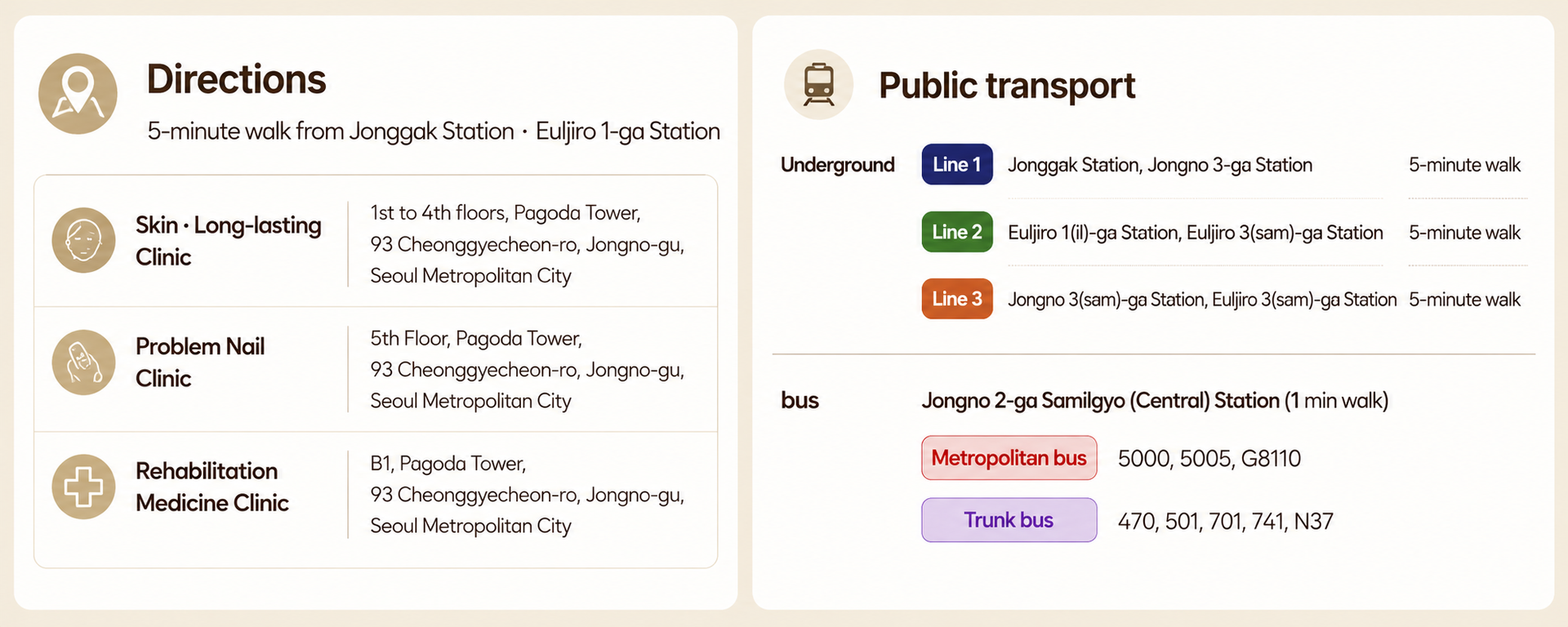
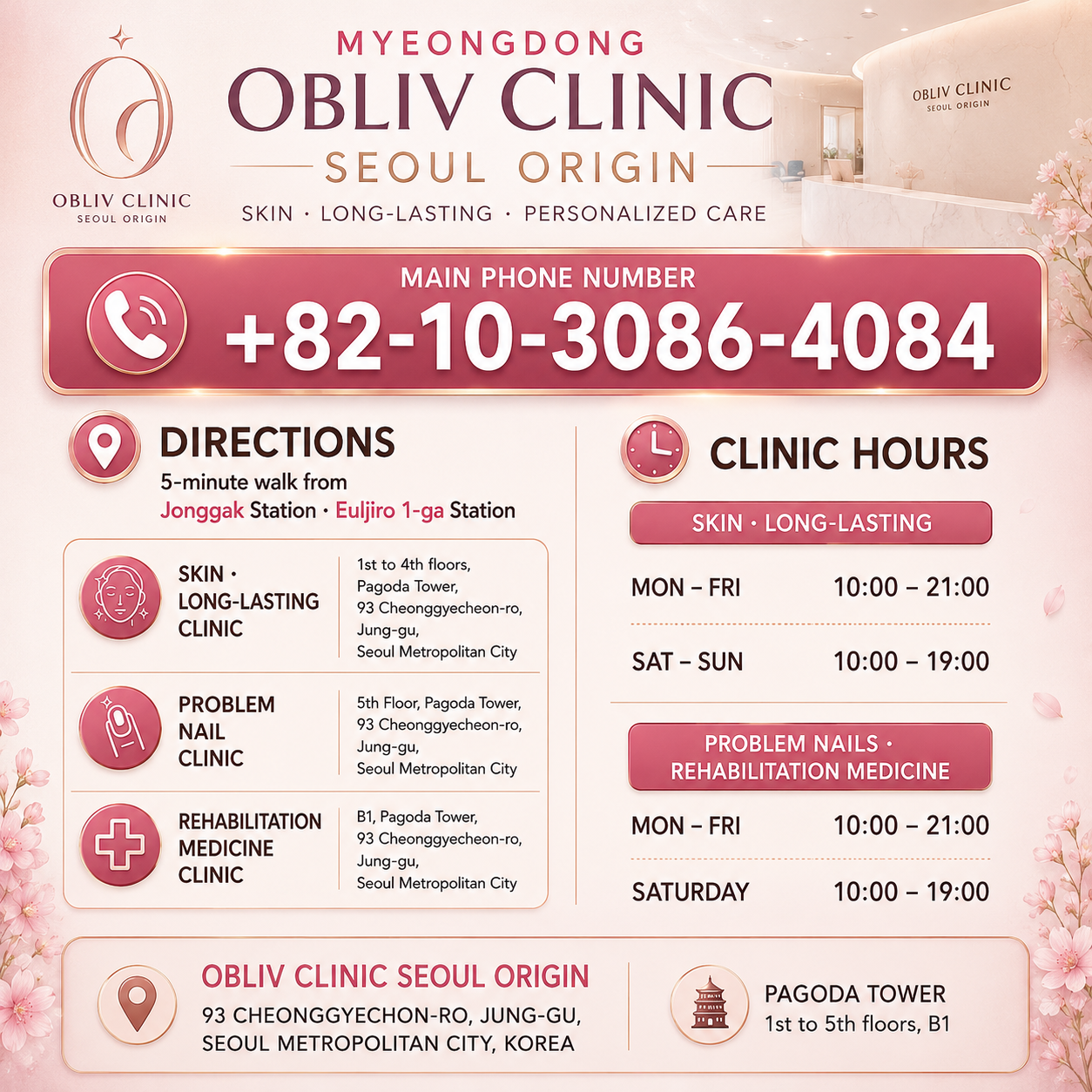
The clinic is located at 93 Cheonggyecheon-ro in Jongno-gu, near Jonggak and Jongno 3-ga stations, and lists skin-clinic hours of 10:00–21:00 Monday–Friday and 10:00–19:00 Saturday–Sunday.
A Smarter Approach to Skin Barrier Treatment
Instead of asking:
“What is the strongest treatment for damaged skin?”
start with:
“Why has my skin barrier become unstable?”
For example:
Dry + Tight → Hydration & Barrier Support
Burning + Stinging → Irritation Assessment
Red + Flushing → Rosacea / Vascular Assessment
Flaking After Laser → Recovery Care
Product Reactions → Ingredient / Trigger Assessment
Acne + Irritation → Balanced Acne & Barrier Management
This approach can help prevent the common cycle of irritation → more treatment → more irritation.
Skin Barrier & Long-Term Maintenance
A healthy barrier benefits from consistency.
A long-term strategy may include:
- Gentle cleansing
- Regular moisturization
- Sun protection
- Avoiding unnecessary exfoliation
- Introducing active ingredients gradually
- Managing acne appropriately
- Avoiding repeated irritation
- Professional follow-up when necessary
The objective is not simply to repair the skin once, but to maintain a stable barrier over time.
Safety & Treatment Considerations
Patients should tell the clinic about:
- Allergies
- Current medications
- Active dermatitis
- Rosacea
- Active skin inflammation
- Recent laser treatment
- Recent chemical peel
- Recent tanning
- Recent sun exposure
- Previous cosmetic reactions
- History of hyperpigmentation
- Upcoming flights
- Important events
If you have severe swelling, blistering, significant pain, oozing, infection-like symptoms, or rapidly worsening inflammation, medical evaluation should take priority over cosmetic treatment.
For more complex or persistent dermatological conditions, Seoul National University Hospital's Department of Dermatology in Jongno treats conditions including atopic dermatitis, contact dermatitis, rosacea, acne, pigmentary disorders, and cosmetic-related skin problems.
Frequently Asked Questions
What is the best skin barrier treatment in Jongno?
There is no single best treatment. The appropriate approach depends on whether the main problem is dehydration, irritation, inflammation, rosacea, dermatitis, or temporary post-procedure sensitivity.
Can a damaged skin barrier be repaired?
Yes, the skin barrier can often recover when the cause of disruption is reduced and appropriate supportive care is provided. Recovery time varies according to the severity and underlying cause.
What is good for a damaged skin barrier?
A simple routine focused on gentle cleansing, moisturization, and sun protection can provide a foundation. Avoiding unnecessary exfoliation and irritating products is also important.
Can I get laser treatment if my skin barrier is damaged?
It depends on the condition of the skin. If the barrier is significantly compromised or inflamed, additional intensive treatment may not be appropriate until the skin stabilizes.
Can sensitive skin and a damaged skin barrier be treated together?
Yes. Sensitive skin often benefits from barrier-supportive care, but persistent redness, rosacea, dermatitis, or other conditions may require additional medical assessment.
Can tourists get skin barrier treatment in Jongno?
Yes. International visitors can seek skin and dermatology care in Jongno. There are numerous dermatology clinics in Jongno-gu, and several clinics specifically provide English-facing information or services.
Can I get skin barrier treatment during a short Seoul trip?
Yes, particularly when the focus is on consultation, hydration, soothing care, and recovery-focused treatment. The appropriate approach depends on the current condition of your skin.
Can I get barrier treatment before flying home?
Gentle treatments may be possible close to departure, but tell the clinic your flight schedule so the treatment and expected recovery can be planned appropriately.
How long does skin-barrier recovery take?
It varies significantly. Mild irritation may settle relatively quickly, while a severely disrupted barrier or an underlying inflammatory condition may require a longer recovery and medical management.
Should I stop all skincare when my skin barrier is damaged?
Not necessarily. Simplifying the routine is often more practical than stopping everything. A clinician can help determine which products should be temporarily reduced or continued according to your skin condition.
Myeongdong Obliv Clinic Seoul Origin – Skin Barrier Treatment in Jongno
For international patients searching for Skin Barrier Treatment in Jongno, Seoul, Korea, Myeongdong Obliv Clinic Seoul Origin provides personalized Korean skin and aesthetic care focused on skin-barrier health, sensitivity, dryness, redness, hydration, irritation, uneven texture, pigmentation, and overall skin quality.
Whether your priority is
repairing a compromised skin barrier, calming sensitive skin, restoring hydration, reducing redness, recovering after cosmetic treatment, or creating smoother and healthier-looking skin, a personalized skin analysis can help determine an appropriate strategy based on your current barrier condition, sensitivity, underlying concerns, previous treatments, skincare routine, travel schedule, recovery requirements, and long-term skin goals.